For high-earning technology professionals, corporate promoters, and modern affluent families in India, gold holds a unique dual position. It acts as both a deeply rooted cultural tradition and a permanent baseline store of value. However, inside many retail portfolios, gold management suffers from significant behavioral errors. It is often evaluated through emotional jewelry consumption, return-chasing behavior during global panics, or fear-driven assumptions about its safety.
An institutional wealth framework treats gold with strict operational discipline. Gold is not a wealth-creation asset; it is a wealth-preservation asset designed to act as an inflation hedge, a currency hedge, and a portfolio stabilizer during major market crises. To maximize its protective value, investors must look past retail trends and analyze the structural pros, transaction costs, tax implications, and regulatory boundaries across the entire gold investment ecosystem.
The Fiduciary Axiom: Wealth Accumulation vs. Capital Preservation
The defining characteristic of an institutional asset class is its ability to generate underlying corporate earnings, distribution yields, or contractual rental cash flows. Growth assets like equities and corporate real estate compound capital exponentially over time because they own productive businesses. Gold, by contrast, is a silent asset that generates no internal yield, pays no dividends, and carries storage costs. Its value relies entirely on purchasing power preservation. Allocating capital to gold should be viewed as buying financial portfolio insurance, not chasing high-frequency outperformance.
Macro Drivers: Deconstructing the Global Gold Price Architecture
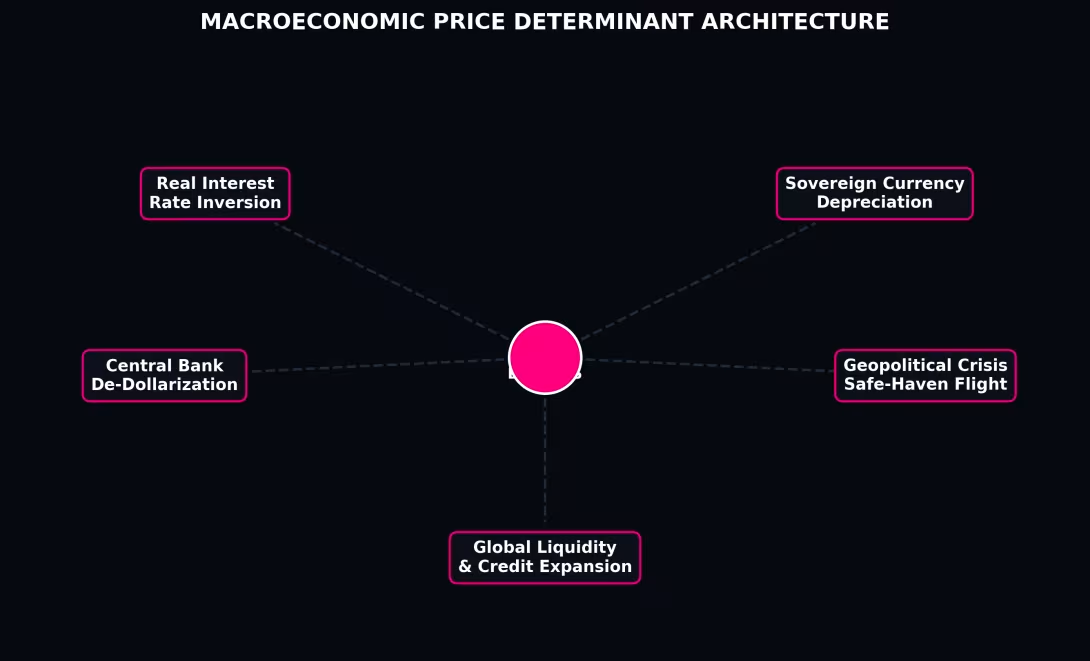
Many individual market participants purchase gold simply because prices are rising, without understanding the macroeconomic forces that drive the asset class. Gold prices operate in an international ecosystem shaped by a few core vectors:
- Real Interest Rate Inversion: Gold shares a strong inverse relationship with real interest rates (nominal interest rates minus inflation). When sovereign bond yields fall or inflation spikes significantly, the opportunity cost of holding non-yielding gold drops, accelerating capital allocation into the asset class.
- Sovereign Currency Depreciation: Because international gold prices are denominated in US Dollars, the asset class serves as a reliable hedge against the structural long-term depreciation of the Indian Rupee (INR).
- De-Dollarization and Central Bank Accumulation: Over the preceding multi-year cycle, global central banks have purchased physical gold reserves at record structural paces. This strategy aims to diversify sovereign balance sheets away from direct G10 fiat currency concentration, establishing a strong floor under global prices.
- Geopolitical Risk and Safe-Haven Flight: During periods of trade disputes, international conflict, or systemic banking stress, institutional capital retreats from high-volatility paper assets into gold, seeking a high-liquidity, counterparty-free safety anchor.
The Opportunity Cost: Historical Returns Deconstructed
To understand where gold fits on your balance sheet, you must analyze its long-term performance across full economic cycles. It is vital to look past short-term price movements and contrast gold directly against competing asset classes:
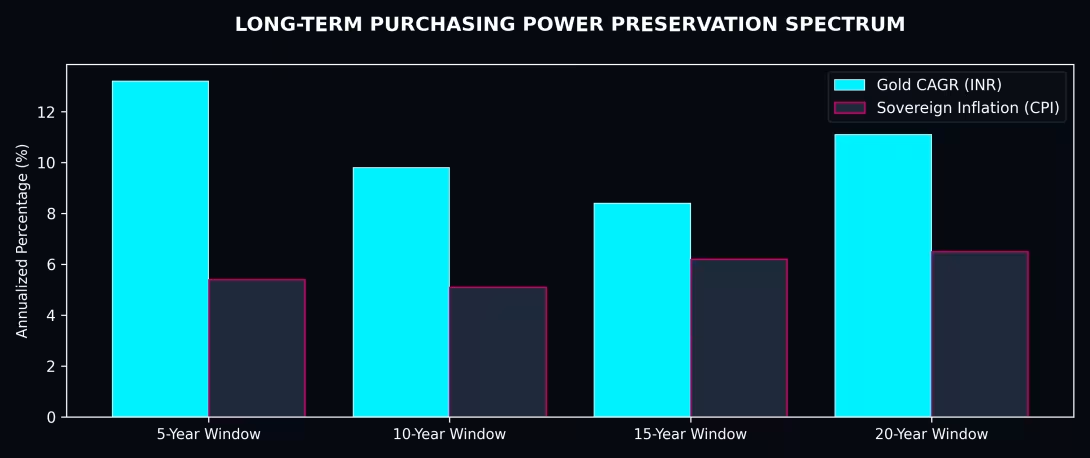
| Trailing Horizon Block | Gold CAGR (INR) Baseline | Nifty 50 TRI CAGR | Average Domestic Fixed Deposit Yield | Sovereign Consumer Inflation (CPI) |
|---|---|---|---|---|
| 5-Year Trailing Window | ~13.2% Annualized | ~14.8% Annualized | ~6.8% Yield Track | ~5.4% Macro Drag |
| 10-Year Trailing Window | ~9.8% Annualized | ~12.4% Annualized | ~7.1% Yield Track | ~5.1% Macro Drag |
| 15-Year Trailing Window | ~8.4% Annualized | ~11.9% Annualized | ~7.4% Yield Track | ~6.2% Macro Drag |
| 20-Year Trailing Window | ~11.1% Annualized | 13.8% Annualized | ~7.6% Yield Track | ~6.5% Macro Drag |
This data highlights an essential truth. While gold successfully protects your capital by beating long-term inflation and outperforming traditional fixed deposits, it consistently lags behind the compounding power of diversified public equities. This return gap represents a clear opportunity cost, confirming that over-allocating to gold can slow down your family's long-term wealth creation.
Physical Gold: The High Friction Heritage Asset
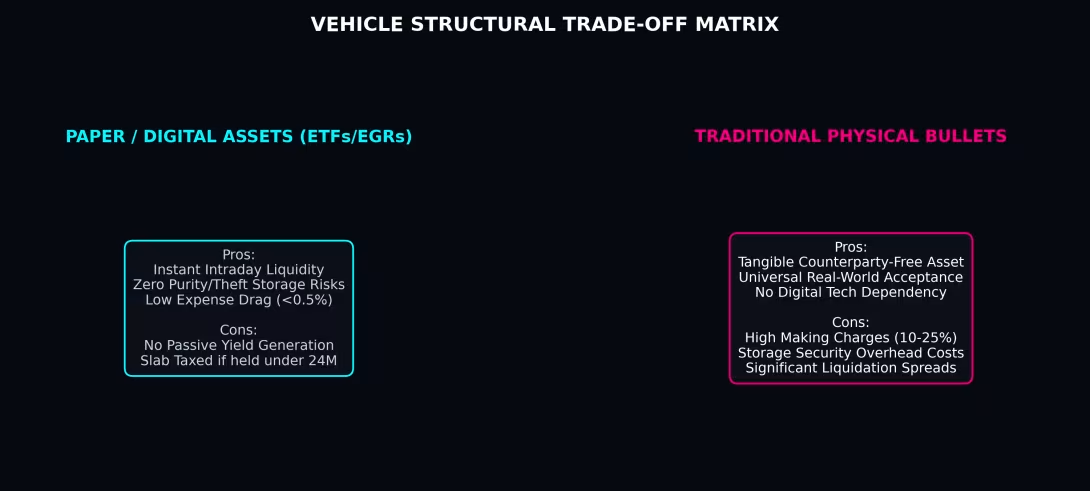
Physical gold—held as jewelry, bullion bars, or minted coins—remains a deeply embedded preferred asset class across India. Its core benefits are clear: it is a tangible asset that is universally recognized and operates completely free from digital technology dependencies or counterparty risks.
However, using physical gold as a core investment vehicle introduces substantial financial drag. Retail jewelry purchases carry high making charges (often ranging from 10% to over 25% of the underlying material value) and incur immediate statutory GST outlays that cannot be recovered upon resale. When you add the ongoing costs of secure bank locker storage, risk of theft, purity variations, and the emotional barriers to selling family heirlooms, physical gold quickly becomes an inefficient way to manage portfolio capital.
Sovereign Gold Bonds (SGBs): Evaluating the Current Policy Realities
Issued by the Reserve Bank of India (RBI) on behalf of the Government of India, Sovereign Gold Bonds (SGBs) have long been considered a highly efficient vehicle for domestic investors. SGBs remove purity concerns, eliminate theft risks, pay a guaranteed interest income on the initial investment value, and offer a full income tax exemption on capital gains realized at the end of the bond's official maturity timeline.
However, the SGB landscape has shifted significantly. The government has halted fresh primary issuance tranches, meaning investors looking for SGB exposure must purchase existing bonds on secondary stock exchange listings. This secondary market route requires careful navigation: many tranches suffer from low trading liquidity, sell at high premiums or deep discounts relative to real-time spot gold prices, and lose their tax-free maturity benefits if sold early on the exchange before the 8-year term expires.
Digital Portfolios: Gold ETFs and Mutual Funds
For modern portfolios, demat-based Gold Exchange-Traded Funds (ETFs) provide a highly efficient, liquid option to hold gold. Each ETF unit is securely backed by physical bullion of 99.5% verified purity, held safely in institutional vaults and verified by regular independent audits. Gold ETFs eliminate making charges, offer transparent intraday pricing, and trade with tight bid-ask spreads on the NSE and BSE, making them an excellent choice for tactical rebalancing.
For investors who prefer not to operate a demat account, Gold Mutual Funds (Fund of Funds) offer an accessible alternative that feeds directly into core Gold ETFs. This path allows you to set up automated Systematic Investment Plans (SIPs) easily. However, it introduces an extra layer of internal management fees (expense ratios) and can experience minor settlement tracking delays compared to direct ETFs.
Unregulated and Modern Horizons: Digital Gold vs. EGRs
Digital Gold—sold through fintech mobile applications and consumer platforms—has grown popular due to its low entry requirements, allowing users to buy gold for as little as ₹1. However, Digital Gold operates in an unregulated environment without strict oversight from SEBI or the RBI. It carries counterparty provider risks, enforces high spread costs between buying and selling prices, and imposes rigid mandatory delivery deadlines (often forcing liquidations within 3 to 5 years), making it unsuitable for serious HNI capital allocation.
To address these structural gaps, SEBI launched Electronic Gold Receipts (EGRs). EGRs are transparent financial instruments traded directly on national stock exchanges. They represent a clear legal title to specific physical gold held in regulated vaults. EGRs standardize purity levels, offer full transparency, allow for seamless conversion into physical bullion if desired, and provide a secure, institutional grade alternative to unregulated digital platforms.
Advanced Global Exposures: Mining Stocks and International Funds
Sophisticated portfolios sometimes attempt to capture higher returns by allocating capital to global gold mining corporations or international commodity funds. It is critical to recognize that *gold mining equities do not behave like physical gold*.
Mining businesses operate with significant structural leverage. While they can deliver outsized returns during secular gold bull markets, they also expose your capital to operational business hazards, corporate management changes, regional environmental regulations, and local labor market disruptions. Buying mining stocks means you are taking on concentrated corporate equity risk, which runs completely counter to gold's primary role as a safe portfolio stabilizer.
Institutional Alignment: Comprehensive Gold Option Matrix
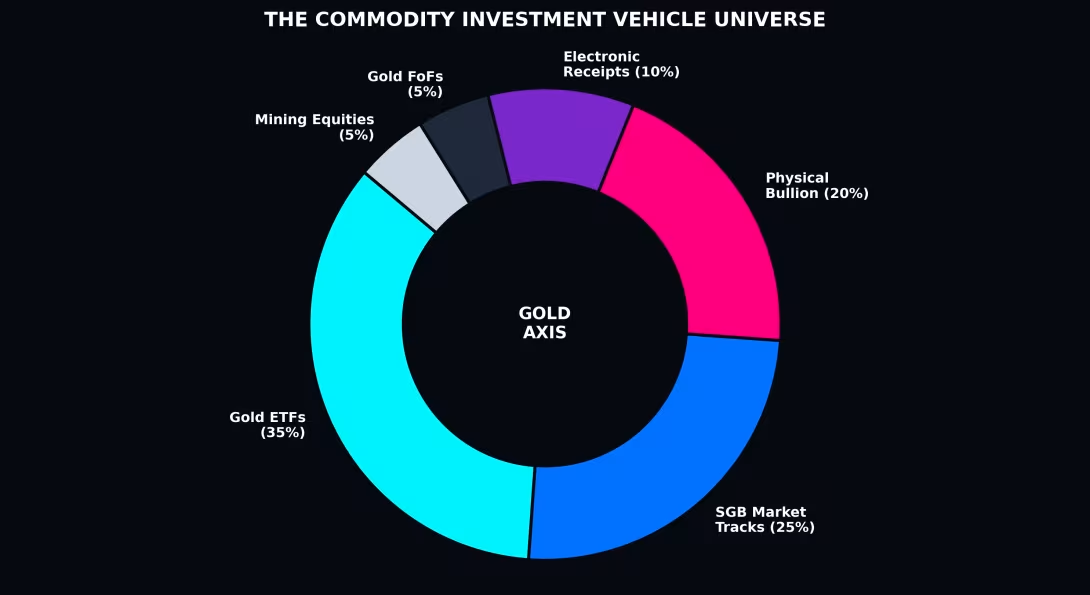
Choosing the right gold vehicle requires evaluating and contrasting all available options across their core operational parameters:
| Investment Vehicle | Expense Drag / Cost | Liquidity Profile | Storage & Purity Risks | Regulatory Oversight |
|---|---|---|---|---|
| Physical Bullion | High (Making & Spread Frictions) | Localized / Moderate | High (Theft Risk / Physical Audit Needed) | None / Unregulated |
| Sovereign Gold Bonds | None (Pays 2.5% Annual Yield) | Low / Locked (Exchange dependent) | Zero Sovereign Protection | Reserve Bank of India (RBI) |
| Gold ETFs / EGRs | Very Low (Expense Ratios <0.5%) | High Instant Intraday Trading | Zero (Institutional Vault Backing) | Securities and Exchange Board of India (SEBI) |
| Digital Gold Products | High Hidden Spread Frictions | Platform Dependent | Moderate Counterparty Risks | Unregulated Perimeter |
Chronological Lifecycles: The Consolidated Gold Taxation Framework
True portfolio performance must always be evaluated on a net-of-tax baseline. To maximize the efficiency of your commodity hedge, you must map the tax liabilities applied to your assets chronologically across three distinct life stages:
| Gold Investment Route | Stage 1: Tax applied At Entry | Stage 2: Tax applied While Invested | Stage 3: Tax applied At Maturity / Liquidation |
|---|---|---|---|
| Physical Bullion / Jewelry | 3% Custom GST applied on gross bill value. Making charges attract an independent 5% GST. | None. No wealth tax framework applies under current domestic regulations. | Short-Term Capital Gains (<24M) taxed at slab. Long-Term Capital Gains (>24M) taxed at flat 12.5% without indexation. |
| Sovereign Gold Bonds (SGB) | Exempt. No GST or transaction taxes applied on exchange purchases. | Biannual 2.50% interest payout is fully taxable under your standard income tax slab rate. | 100% Tax-Free if held to full 8-year maturity. Early exchange sales face flat 12.5% LTCG tax rules (>24M). |
| Gold ETFs / Mutual Funds | Exempt. No initial GST. Brokerage fees and minimal exchange transaction costs apply. | None. Internal portfolio management charges are subtracted directly from the fund's NAV. | Short-Term Capital Gains (<24M) taxed at slab. Long-Term Capital Gains (>24M) taxed at flat 12.5% without indexation. |
| Electronic Gold Receipts (EGR) | Exempt at trading point. Standard exchange transaction fees and brokerage rates apply. | None. Storage and vaulting tracking expenses are deducted natively via platform guidelines. | Short-Term Capital Gains (<24M) taxed at slab. Long-Term Capital Gains (>24M) taxed at flat 12.5% without indexation. |
| Digital Gold Products | 3% premium GST added instantly at transaction point by platform providers. | None. Free vault storage is guaranteed by providers for a restricted timeline block. | Short-Term Capital Gains (<24M) taxed at slab. Long-Term Capital Gains (>24M) taxed at flat 12.5% without indexation. |
When Gold Fails Investors: The Non-Compounding Reality
A crucial element of risk management is identifying the macroeconomic conditions where an asset class fails to protect your capital. Because retail financial media frequently promotes gold as an all-weather safety net, investors often overlook its long historical phases of stagnation and underperformance:
- Extended Eras of Real Underperformance: Gold can experience long multi-year periods where it delivers zero or negative real returns. For example, after hitting a major macro peak in 1980, international gold prices consolidated for nearly two decades, lagging far behind the explosive compounding returns of public equities.
- The Cost of Drag in Expansionary Cycles: During prolonged equity bull markets driven by technological breakthroughs, corporate growth, and expanding earnings, holding an over-allocated gold position creates an expensive drag on your portfolio, hurting your long-term compounding momentum.
- Chasing Rallies at Macro Peaks: Investors often increase their gold holdings right at the peak of international crises or geopolitical panics, driven by emotional recency bias. Buying at these cyclical peaks typically results in low subsequent returns once global markets stabilize and capital moves back into productive growth assets.
Portfolio Integration: Setting the Allocation Framework
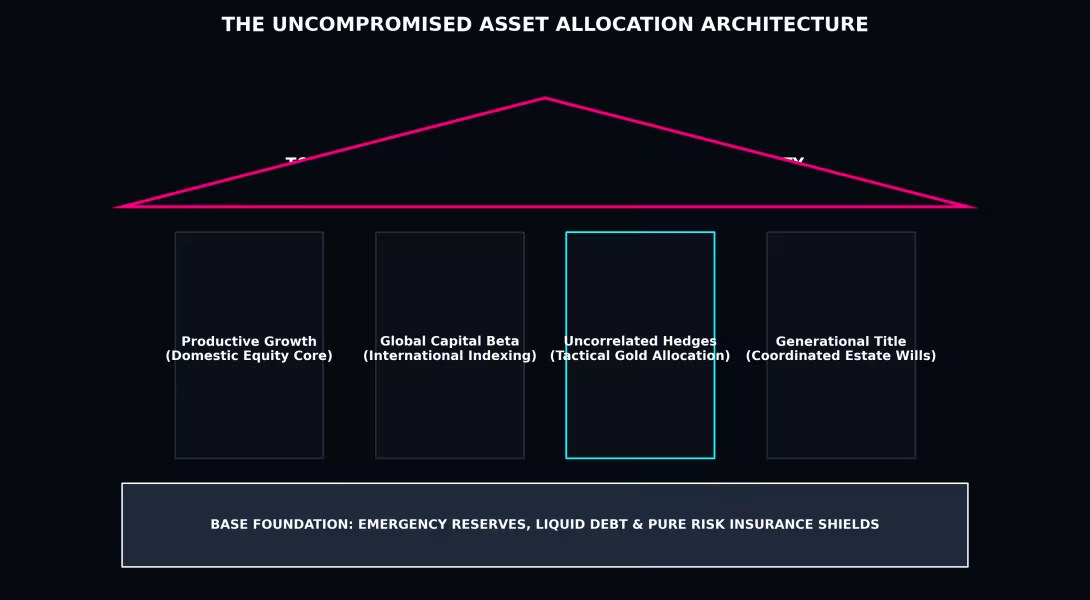
Because gold generates no internal cash flow and acts primarily as an anchor, your portfolio allocation must be governed by strict strategic boundaries rather than emotional market reactions. For an affluent household, an optimal asset allocation model caps gold exposure within a 5% to 10% tactical corridor of your total liquid net worth.
This structured envelope provides enough premium insurance to stabilize your portfolio and shield your family's baseline lifestyle capital from sequence-of-returns risks during severe equity drawdowns. At the same time, it prevents excess cash from sitting idle, ensuring your primary capital remains safely deployed in productive, wealth-creating equity and corporate debt channels.
Ultimately, the conclusion of a professional strategy is not to blindly purchase commodity assets. It is to understand exactly why you are holding gold, select the most cost-efficient, regulated vehicle, manage your post-tax lifecycles carefully, and ensure your commodity hedge plays a disciplined role within a broader financial architecture rather than becoming the plan itself.
The True Role of a SEBI Registered Investment Adviser
Navigating the intersections of structural asset allocation, commodity tax codes, multi-currency asset location, and estate continuity completely on your own can quickly turn into an exhausting second job. That is precisely why partnering with a fee-only, SEBI Registered Investment Adviser (RIA) is so vital. A true fiduciary adviser looks past short-term transaction volumes or sales pitches. Their focus is completely on your long-term success.
At Wealth Together, our relationship model is completely decoupled from conflict-laden sales commissions or hidden distribution networks. Having successfully navigated this exact corporate transition ourselves, we understand the unique pressures facing high-end technology professionals and modern families. Our mission is to serve as an objective, trusted sounding board—helping you define an uncompromised asset allocation strategy, choose the most cost-efficient investment vehicles, manage real portfolio risks, and ensure that your commodity allocations play an appropriate, disciplined role within a broader financial architecture built to preserve your family's legacy.
We invite you to explore our custom Get Started Roadmap to understand our transparent, fee-only advisory onboarding process, or seamlessly utilize our floating portal block to secure your personalized, uncompromised portfolio discovery session today.
Skip commission-driven sales pitches and align your capital with a pure fee-only fiduciary adviser.