For high-earning technology executives, corporate promoters, and modern affluent families, observing the wealth paths of High-Net-Worth Individuals (HNIs) often leads to a common misconception. The assumption is that the wealthy invest differently simply because they have more capital to deploy. In reality, the divergence is not a function of absolute scale, but of structural philosophy.
While traditional retail market participants focus almost exclusively on high-frequency absolute returns, sophisticated wealth owners look at the system through a lens of risk-adjusted resilience. As capital bases grow, the primary objectives naturally shift away from speculative picking toward long-term asset preservation, absolute tax optimization, multi-cycle diversification, and strict liquidity bucketing. By analyzing how institutional portfolios are built, investors can discover the exact architectural principles required to immunize their family wealth from market volatility.
The Core Philosophy: Risk-Adjusted Return Architecture
The defining characteristic of an institutional HNI portfolio is an unyielding focus on the Sharpe Ratio—the measure of risk-adjusted alpha. Generating a 12% annualized yield with low, controlled volatility is mathematically superior to generating a 15% yield exposed to catastrophic drawdowns. Minimizing deep capital impairment during equity market corrections is the absolute hidden multiplier of long-term compounding velocity.
Strategic Asset Allocation: The Multi-Cycle Foundation
Empirical wealth data consistently confirms that asset allocation policies contribute significantly more to long-term portfolio performance variances than individual stock selection or specific market timing. Sophisticated portfolios utilize an institutional allocation matrix, treating capital deployment as a structured system built to withstand diverse macroeconomic environments rather than an emotional response to short-term trends.
| Asset Classification | Strategic Purview within the Portfolio | Target Tactical Allocation Range |
|---|---|---|
| Equities (Domestic & Global) | Long-term compounding engine; beating real structural inflation. | 40% – 60% Base Track. |
| Fixed Income & Debt | Capital preservation, volatility dampening, and rebalancing dry powder. | 20% – 40% Security Block. |
| Alternative Assets | Uncorrelated alpha generation, yield compression insulation, and private equity. | 10% – 20% Alpha Vector. |
| Commodities & Sovereign Gold | Macroeconomic tail-risk hedging and systemic currency devaluations. | 5% – 10% Insurance Anchor. |
Equity Optimization: Engineering the Core-Satellite Shield
When deploying capital into equity markets, sophisticated wealth owners completely bypass the standard retail trap of managing a fragmented, unhedged list of speculative stock tips. Instead, equity exposure is separated into an explicit core-satellite framework designed to manage risk cleanly:
- The Core Compounding Ledger (70% - 80% of Equity Pool): Anchored securely in low-cost index funds, high-quality large-caps, and flexi-cap direct plans. The sole objective here is capturing consistent, tax-optimized market returns while maintaining absolute baseline liquidity.
- The Satellite Alpha Vector (20% - 30% of Equity Pool): Composed of tightly controlled mid-and-small-cap allocations, targeted thematic exposures, and dynamic sector bets. This block is built to capture structural tailwinds without exposing the family's broader balance sheet to severe drawdowns.
Debt Segmentation: Maturity Laddering and Capital Defense
During equity bull markets, retail participants often dismiss fixed income as an inefficient drag on performance. Institutional wealth managers approach debt with a completely different mindset. Debt is not utilized to maximize absolute yield; it is deployed to secure liquidity protection and reduce overall portfolio volatility.
By deploying systematic maturity laddering across corporate bonds, target maturity funds, and short-duration direct plans, sophisticated investors construct a continuous income and liquidity runway. This framework provides clean capital protection, satisfies immediate lifestyle cash flows, and ensures that when equities inevitably correct, the firm holds liquid dry powder to purchase high-quality businesses at deep discounts.
Alternative Investment Architecture: The Key Uncorrelated Differentiator
A key distinction between standard retail portfolios and sophisticated HNI capital architecture is the intentional use of Alternative Investment Funds (AIFs) and structured real assets. Alternative allocations are not deployed to chase high-frequency returns; they are used to capture structural premiums and yields that do not correlate directly with volatile public equity markets.
Within this asset class, capital is systematically allocated across specific institutional frameworks to serve different roles:
- Category I & II AIF Structures: Used to access early-stage private equity, venture capital pools, and structured unlisted corporate expansion tracks. This access allows investors to build long-term capital compounding outside of standard public exchanges.
- Private Credit and Structured Debt Platforms: Positioned to capture senior secured credit yields, real estate debt, and mezzanine financing tracks, delivering steady cash inflows with robust asset backstops.
- Liquid Real Assets (REITs & InvITs): Real Estate Investment Trusts and Infrastructure Investment Trusts are utilized to generate regular, inflation-hedged dividend cash flows backed by institutional commercial properties and core national infrastructure assets, avoiding the high costs and illiquidity of direct residential real estate.
Tactical Asset Allocation: Dynamic Adjustments vs. Speculative Trading
While strategic asset allocation forms the core baseline foundation of an institutional portfolio, sophisticated investors also deploy a disciplined Tactical Asset Allocation Framework. This approach should never be confused with emotional market timing or short-term speculative trading. Instead, it relies on a data-driven process that dynamically shifts portfolio weights when specific market metrics hit extreme historical valuations.
This operational adjustment process targets core parameters across the macroeconomic landscape:
| Macro Valuation Vector | Core Data Points Monitored | Systematic Portfolio Adjustment Rule |
|---|---|---|
| Equity Valuation Extremes | Trailing P/E Ratios, Market Cap-to-GDP Metrics | Systematically reducing satellite equity weights and transferring capital to short-term debt shields. |
| Interest Rate Macro Cycles | RBI Repo Changes, Sovereign Yield Curve Movements | Locking in long-term high yields via maturity laddering or target maturity bond tracks. |
| Macroeconomic Uncertainty | Global Inflation Tracking, Geopolitical Stress Indicators | Increasing allocations to Sovereign Gold Bonds and cash-equivalent liquid funds as an insurance anchor. |
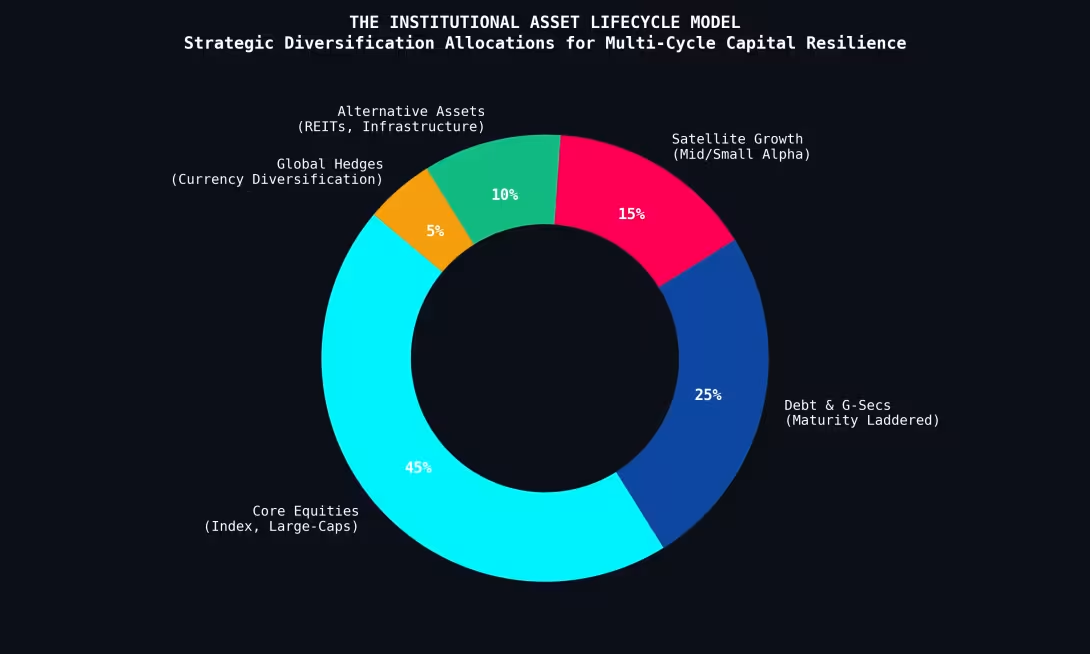
Alternatives & Global Assets: Uncorrelated Diversification
A major distinction in sophisticated portfolios is the deliberate integration of non-traditional asset classes. Alternative investment components—such as real estate investment trusts (REITs), infrastructure investment trusts (InvITs), and private credit pools—help protect capital from broad equity market downturns.
This risk mitigation strategy is paired with cross-border geographical diversification. Allocating capital globally into international indexes, specialized tech exchange-traded funds (ETFs), or compliance-mapped inbound assets is not a speculative move to abandon domestic markets. Rather, it acts as a long-term strategic hedge against long-term currency depreciation and offers structural exposure to dominant global macroeconomic trends—such as advanced semiconductors, artificial intelligence systems, and biotechnology innovations—that may be underrepresented locally.
Tactical Liquidity Bucketing: Eliminating Forced Selling
A severe risk facing long-term compounding outcomes is being forced to liquidate equity assets at deep discounts during an unexpected market correction to satisfy immediate real-world cash requirements. Institutional portfolios mitigate this operational risk by implementing a strict tripartite liquidity bucket system:
| Liquidity Bucket Track | Target Time Horizon | Permitted Financial Instruments | Core Operational Purpose |
|---|---|---|---|
| Bucket 1: Immediate Cashway | 0 – 12 Months Run | Liquid Funds, Arbitrage Direct Plans | Emergency reserves, lifestyle burn rates, business contingencies |
| Bucket 2: Strategic Medium-Term | 1 – 5 Year Horizon | Short-Duration Fixed Income, Conservative Hybrids | Planned capital expenditures, tax outlays, business requirements |
| Bucket 3: Terminal Compounding | 5+ Years Inter-Gen | Core Equities, International Assets, Alternatives | Multi-generational compound wealth creation, retirement legacy planning |
The Wealth Multiplier: Systematic Tax Aware Execution
Finally, sophisticated wealth management always evaluates performance metrics on a strict net-of-tax, post-inflation basis. True wealth creation requires navigating long-term capital gains tax structures, restructuring holding distributions, managing family asset frameworks, and implementing periodic rebalancing disciplines within regulatory limits. At the end of the day, maintaining absolute behavioral discipline—avoiding emotional adjustments, ignoring short-term financial media noise, and keeping leverage tightly controlled—contributes significantly more to long-term wealth survival than access to exclusive products alone.
At Wealth Together, our fiduciary advisory framework is built on a pure, fee-only model specifically engineered to manage these moving pieces cleanly. By removing conflict-laden product commissions, we help you transition your capital away from fragmented retail patterns and design an elegant, resilient portfolio built to preserve and multiply your household legacy for generations to come.
We invite you to explore our custom Get Started Roadmap to understand our transparent onboarding process, or seamlessly use the floating portal gateway to secure your personalized, zero-obligation portfolio diagnostic session today.
Skip commission-driven sales pitches and align your capital with a pure fee-only fiduciary adviser.