Many high-income professionals spend decades building exceptional careers, yet comprehensive retirement planning often remains an afterthought. It is a common paradox: a medical specialist, corporate CXO, senior consultant, or partner inside a premier firm routinely commands an annual active income ranging from ₹75 Lakhs to over ₹2 Crores, yet their long-term retirement strategy remains completely fragmented. High net worth does not guarantee retirement security if that wealth is locked inside illiquid real estate, concentrated employer stock lots, or volatile active business assets without a structured transition blueprint.
The core challenge for affluent earners is not access to capital; it is active income dependence coupled with lifestyle inflation. As active revenue grows, personal expenditure lines tend to rise proportionately, shifting the retirement landscape from a basic corpus-estimation problem into a complex income replacement challenge. To transition safely past your peak earning years, your portfolio must shift from transaction-driven product accumulation into a robust, tax-aware fiduciary asset architecture. This guide serves as the definitive framework to build, protect, and distribute long-term wealth securely across your lifetime.
Why Retirement Planning Is Fundamentally Different for High Earners
High-income professionals face unique career risk profiles, compensation structures, and asset architectures that require tailored wealth management strategies:
- Medical Professionals and Surgeons: Earning capacity is deeply linked to active practice. A surgeon’s revenue depends entirely on personal physical ability, diagnostic acumen, and active clinical hours, making the household balance sheet highly vulnerable to sudden health shocks or a lack of institutional succession options.
- Corporate CXOs and Startup Executives: Total compensation is heavily weighted toward variable annual bonuses, corporate performance milestones, and highly concentrated ESOP blocks. This concentration ties a massive percentage of personal net worth directly to the performance of a single employer, combining personal career risk with underlying asset risk.
- Boutique Partners and Advisors: Gross billings are driven entirely by personal brand authority and specialized market reputation. When active involvement drops, consulting revenue declines sharply, requiring a structured plan to convert active billings into passive cash flows.
- Senior Executives: Compensation packages often utilize complex "golden handcuff" retention structures and deferred vesting schedules. These systems frequently accelerate lifestyle inflation, locking families into high overhead regimes that must be funded through retirement.
The Systemic Risks to Affluent Portfolios
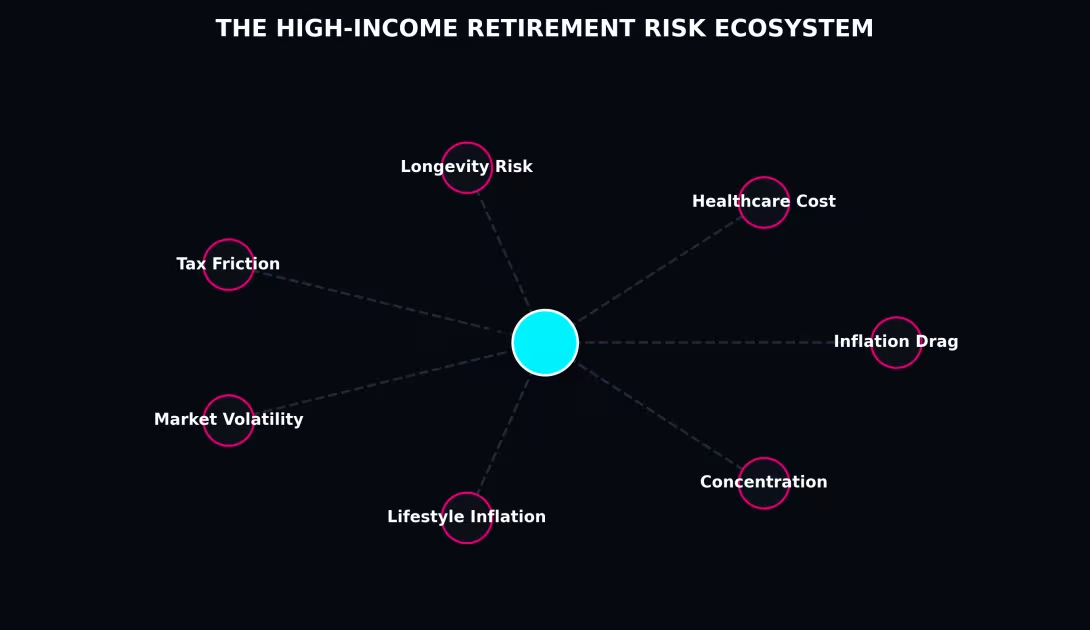
To insulate your net worth from structural erosion, your financial plan must actively manage five specific risks:
- Lifestyle Inflation: The silent wealth destroyer. As active income scales from ₹25 Lakhs to ₹1 Crore and beyond, household overheads routinely expand across premium real estate commitments, luxury lifestyle cycles, and high discretionary costs. Funding this elevated lifestyle baseline throughout a multi-decade retirement requires a significantly larger and more liquid capital base.
- Delayed Compounding Milestones: Specialized professionals often invest their early decades into extensive higher education, specialized fellowships, or initial practice setups. Serious, large-scale capital investing frequently gets postponed until their mid-to-late 30s, meaning their capital has a shorter timeline to compound before retirement.
- Asset Allocation Concentration: Portfolios are often heavily concentrated in a single asset class—such as a single corporate employer stock, illiquid commercial real estate parcels, or capital tied up entirely within a personal clinic. This lack of diversification leaves the family balance sheet vulnerable to sharp sector downturns.
- Active Healthcare and Practice Risk: High-performance careers depend heavily on specialized physical and mental acuity. If a medical professional or advisor faces a health issue that cuts their active practice short, the loss of active income can immediately derail their retirement plan if they lack proper disability or risk insurance walls.
- Extended Longevity Horizons: Advanced medical care means retirement horizons are extending significantly. An affluent professional retiring today must build a framework designed to sustain their lifestyle over a 30, 35, or even 40-year distribution phase, making protection against inflation-driven purchasing power drops essential.
Defining Retirement Beyond a Simple Corpus Number
Traditional retirement articles focus on an arbitrary corpus target. For high-income professionals, the real question is not *how much money do I need?* but *what specific lifestyle parameters am I looking to protect and maintain?* Changing the focus from an abstract target number to a dynamic, lifestyle-driven framework allows you to split your future cash requirements into three distinct, manageable expense tiers:
| Expense Tier Classification | Core Operational Boundaries | Inflation Exposure Metrics |
|---|---|---|
| Essential Cash Commitments | Baseline household utility costs, basic medical insurance, property taxes, and domestic upkeep overheads. | Highly linked to domestic structural inflation baselines. |
| Lifestyle Maintenance Pacing | International travel calendars, club memberships, regular vehicle upgrades, and discretionary entertainment choices. | Subject to lifestyle inflation trends. |
| Aspirational and Legacy Outflows | Philanthropic endowments, seed capital for the next generation, high-value art collections, and multi-generational trust allocations. | Discretionary, matching the harvest phases of your broader portfolio. |
Structuring a Multi-Stream Retirement Income Engine
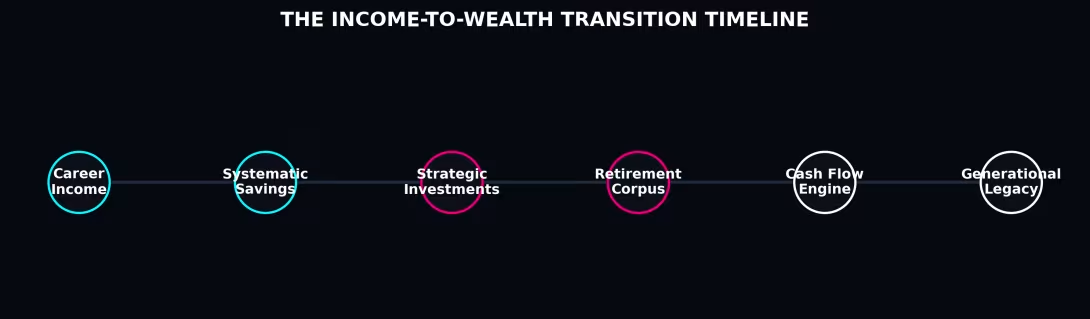
To reduce systemic single-point-of-failure risk, an affluent retirement framework uses multiple, uncorrelated income streams that run parallel to each other:
- Stream 1 — Systematic Portfolio Withdrawals: Executing calculated liquidations across fee-optimized, direct index trackers and active equity mutual funds to fund core lifestyle costs.
- Stream 2 — Dividend-Producing Equity Pools: Allocating capital to high-conviction, large-cap corporate stock holdings to generate predictable, passive cash flow lines without eroding your principal share base.
- Stream 3 — High-Quality Fixed Income and Debt: Utilizing target maturity debt instruments, secure corporate bonds, and sovereign fixed-income allocations to provide a reliable, non-volatile base layer for your cash flow needs.
- Stream 4 — Rental Yield and Liquid Real Estate: Incorporating commercial spaces or real estate investment trusts (REITs) to deliver inflation-linked rental distributions. This approach avoids the high entry costs and illiquidity traps of direct residential real estate holdings.
- Stream 5 — Phased Advisory and Consulting Inflows: Capitalizing on specialized personal expertise by moving into part-time corporate advisory roles, active board positions, or independent consulting mandates. This phased transition keeps your active skills engaged while keeping your primary portfolio untouched during the early years of retirement.
Managing the Critical Sequence of Returns Risk
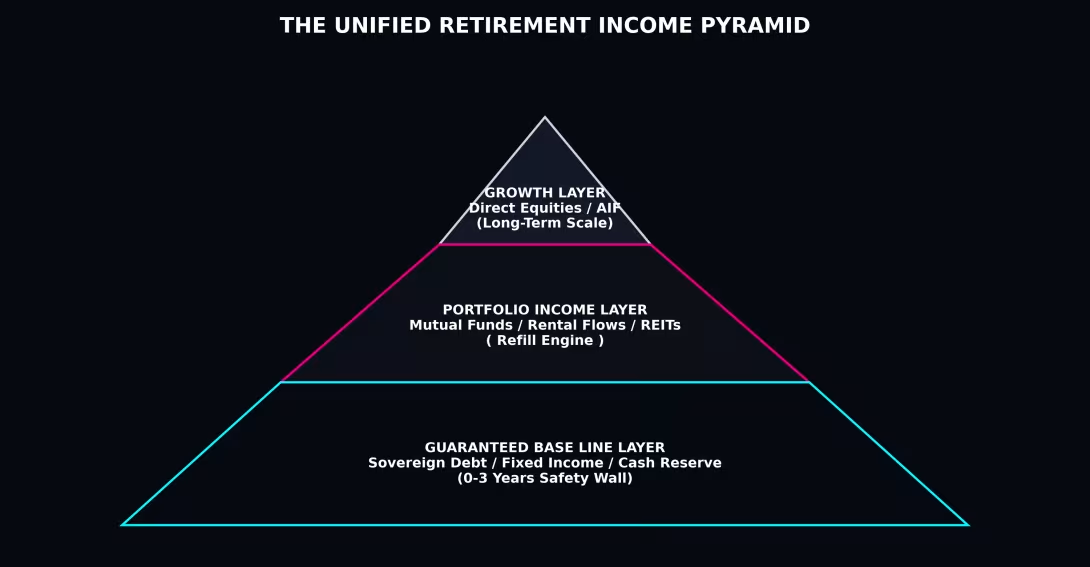
The single most dangerous threat to a newly retired professional's long-term portfolio stability is Sequence of Returns Risk. This risk means that experiencing sharp, negative market returns in the immediate years before or right after you begin drawing from your portfolio can permanently damage its long-term survival. If you are forced to liquidate equity shares at deeply depressed valuations during a market correction to fund your daily living costs, you lock in capital losses and reduce your portfolio's ability to rebound during the next market upcycle.
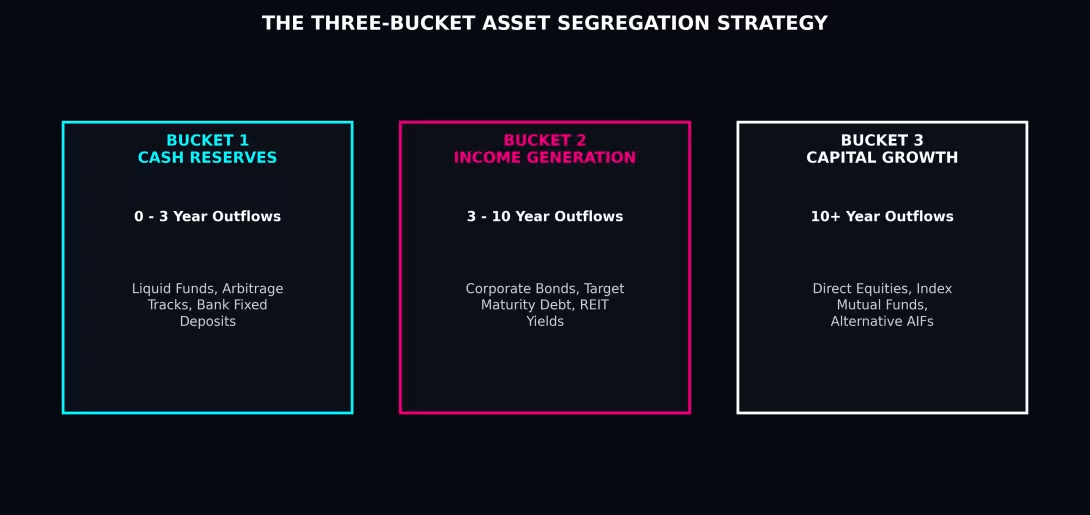
To manage this risk effectively, we implement a Three-Bucket Structural Separation Strategy. This approach keeps your immediate living costs insulated from short-term stock market volatility:
| Bucket Layer | Time Horizon Allocation | Target Financial Instruments | Core Operational Objective |
|---|---|---|---|
| Bucket 1: Cash Reserves | 0 to 3 Years of Outflows | Liquid arbitrage funds, short-term treasury bills, and secure bank fixed deposits. | Provides a completely stable, non-volatile cash source for immediate living costs, removing the need to sell equities during a market drop. |
| Bucket 2: Income Generation | 3 to 10 Years of Outflows | High-quality corporate bonds, target maturity debt portfolios, and liquid REIT distributions. | Delivers stable, predictable returns to systematically refill the primary cash bucket as it gets drawn down. |
| Bucket 3: Capital Growth | 10+ Years of Outflows | Direct blue-chip equities, diversified index mutual funds, and institutional alternative structures (AIFs). | Focuses entirely on long-term capital growth, allowing your core equity investments to compound undisturbed through full market cycles. |
Healthcare Architecture and Medical Inflation Guardrails
Healthcare costs are often the largest unpredictable expense in an affluent retirement plan, and high earners—especially doctors—frequently underestimate their personal medical expenses. With specialized medical inflation running significantly higher than standard consumer price inflation, an unexpected health issue can quickly drain a portfolio if it isn't properly protected.
Building a robust healthcare shield requires looking past basic employer-provided group health policies and setting up an independent, dedicated medical protection framework:
- Independent Base Health Policies: Securing a standalone, high-sum-insured personal health insurance cover early in your career to ensure your protection is completely separated from your employment or corporate executive track.
- Super Top-Up Enhancements: Layering your base plan with a high-deductible super top-up policy. This provides a cost-effective way to build a massive multi-million rupee insurance buffer to cover major medical procedures or critical illness treatments without triggering high annual premium costs.
- Dedicated Emergency Medical Reserves: Maintaining an independent, liquid emergency capital reserve alongside your primary retirement buckets. This fund is designed to cover experimental treatments, specialized out-of-pocket medical costs, or private room upgrades that fall outside standard insurance policy terms.
Managing Concentrated ESOPs and Shifting Corporate Wealth
For corporate CXOs and senior startup executives, a massive percentage of personal wealth often sits inside a single asset class: vested corporate ESOPs, stock option grants, or performance shares. While holding a large position in a fast-growing enterprise can accelerate early wealth building, carrying that concentration into retirement introduces significant structural risk.
Fiduciary risk management requires building a systematic diversification strategy to safely transition out of concentrated positions:
- Systematic Vesting Liquidations: Automatically selling a set percentage of your corporate stock allocations immediately upon vesting, regardless of current market narratives. This allows you to steadily move capital out of single-company risk and redirect it into a well-diversified global portfolio.
- Proactive Tax Liability Mapping: Planning around the multi-tiered tax triggers embedded within stock option structures. This involves tracking your liabilities across the perquisite tax applied at exercise (taxed at your individual income tax slab) and the subsequent capital gains tax triggered upon final share sale.
- Strategic Reinvestment Routines: Moving your realized stock proceeds out of single-company exposure and systematically deploying them into low-cost, direct index funds or diversified asset frameworks. This ensures your capital can compound safely, insulated from the vulnerabilities of an individual corporation.
Tax-Aware Retirement Planning and Structural Asset Location
Maximizing long-term wealth retention requires shifting focus from gross performance numbers to optimizing your net-of-tax returns. Implementing a proactive asset location strategy means placing your investments across different accounts based on how they are taxed, allowing you to reduce the impact of annual tax drag on your compounding growth:
- Capital Gains Harvesting: Systematically selling and immediately buying back equity assets at the end of each fiscal year to utilize the baseline long-term capital gains tax exemptions, helping reset your portfolio's cost basis over time.
- Strategic Asset Placement: Positioning tax-heavy, income-generating instruments (like debt portfolios or high-yield bonds) inside tax-advantaged structures, while keeping your high-growth, long-term equity assets inside tax-deferred compounding wrappers.
- Tax-Efficient Withdrawal Routing: Balancing your monthly retirement distributions across different asset classes—such as combining systematic equity liquidations with debt redemptions and dividend inflows—to keep your total taxable income profile inside the lowest possible tax brackets each fiscal year.
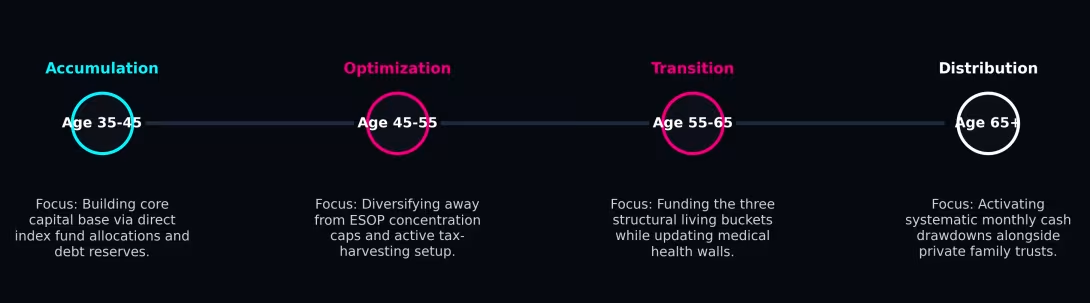
Common Problems Seen in Product-Led Portfolios
When an executive or professional builds a portfolio around fragmented product sales rather than an integrated plan, several common structural issues tend to emerge:
- Holding an unmanageable collection of 30+ overlapping mutual fund schemes, which dilutes active returns and mimics an expensive index fund.
- Allocating significant capital to low-yield, commission-heavy insurance-cum-investment policies (like ULIPs or endowment plans) that fail to provide adequate insurance protection or meaningful wealth growth.
- Over-investing surplus capital into illiquid, residential real estate markets, which locks up generational wealth and complicates future cash flow distribution.
- Lacking an estate plan, complete wills, or aligned account nominations, which exposes the family's assets to prolonged probate delays and legal disputes.
- Operating standard domestic resident bank accounts while working abroad on a foreign employment visa, which directly violates FEMA statutory guidelines.
Retirement and Estate Planning: The Missing Link
A frequently overlooked risk in retirement planning is estate planning. A standard asset architecture is incomplete if it fails to include a clear plan to pass wealth to the next generation smoothly. For affluent families, managing this transition requires establishing structured legacy guardrails:
- Concurrent Jurisdictional Wills: Maintaining clear, independent, and legally valid wills across every country where you hold substantial wealth (such as holding one explicit will for your Indian investments and a separate will for offshore accounts) ensuring they don't accidentally revoke each other.
- Nomination vs. Legal Succession Clarification: Recognizing that under Indian law, a bank or mutual fund nomination is merely an administrative tool. A nominee acts as a trustee, not the permanent legal heir. Your wealth will ultimately be distributed according to your valid will or succession laws, making proper testamentary planning essential.
- Private Family Trusts: Setting up private family trusts to hold and manage multi-generational wealth. This structure protects your estate from prolonged probate processes, insulates family assets from potential business liabilities, and allows for controlled distribution to future generations.
What Does Retirement Actually Mean for High Performers?
For high-performing corporate executives, medical specialists, and senior advisors, traditional retirement—completely stepping away from professional life to enter passive leisure—is rarely the objective. True retirement planning for high achievers is about securing complete financial independence, giving you the freedom to choose your projects without being dependent on active income.
Achieving this level of financial freedom allows you to shift into elite, high-impact professional paths during your later years: moving into selective corporate advisory roles, serving on independent corporate boards, mentoring early-stage startups, backing innovative ventures as an angel investor, or building philanthropic foundations. This approach turns retirement into an active phase of purpose-driven contribution, backed by a secure and uncompromised wealth architecture.
The Role of an Independent Fiduciary SEBI Registered Investment Adviser
Navigating the intersections of multi-bucket asset allocation, sequence of returns risk, tax optimization, and cross-border regulatory compliance requires an expert, uncompromised advisory relationship. A SEBI Registered Investment Adviser (RIA) operates under a strict, client-funded fee-only model. They are prohibited from collecting hidden commissions, product trailing payouts, or distribution incentives from financial product houses.
This fee-only structure ensures the adviser's incentives remain perfectly aligned with your personal balance sheet. A fiduciary partner works as your objective strategic advocate, building a comprehensive, data-driven financial architecture tailored entirely to your family's long-term security. We help you eliminate hidden product friction, manage active style concentration risks, and design a clear roadmap to protect and grow your generational legacy across full market cycles.
We invite you to explore our comprehensive, commission-free advisory framework through our structured Get Started Onboarding Portal, or connect with our secure gateway to arrange a private, zero-obligation introductory consultation today.
Skip commission-driven sales pitches and align your capital with a pure fee-only fiduciary adviser.