Most investors don't need more products. They need better financial decisions. Across the Indian financial services landscape, the vast majority of affluent families already hold a diverse collection of instruments: multiple mutual fund schemes, legacy insurance policies, fixed deposits, ULIPs, direct equity lots, and real estate parcels. Yet, despite accumulating these individual products, they frequently lack structural clarity, tax optimization, proper retirement pacing, estate readiness, and true goal alignment. Fragmented product accumulation does not equal a unified financial strategy.
A product seller solves transactions, whereas a fiduciary financial planner solves long-term financial life problems. When advice is tied to execution volume, the goal is inevitably to cross-sell more wrappers. True wealth management reverses this timeline by mapping your family cash flows, risk tolerances, tax liabilities, and lifestyle milestones into a single connected system before any underlying transaction is discussed. This educational guide maps the structural differences between commission-led distribution and fee-only fiduciary financial architecture under the Securities and Exchange Board of India framework.
What Holistic Financial Planning Actually Means
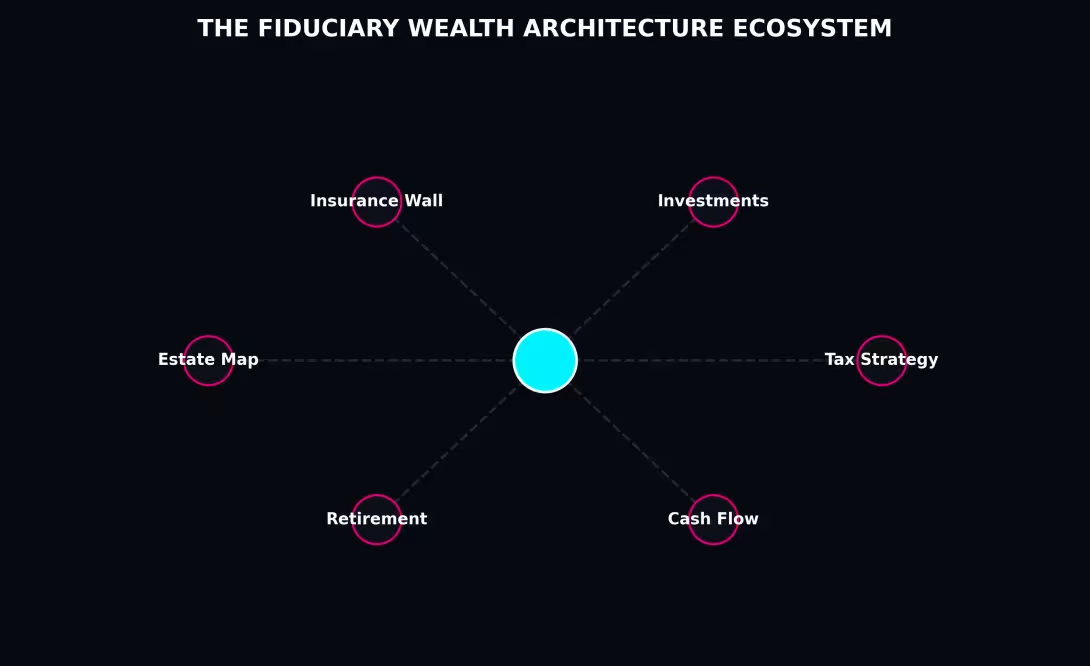
Holistic financial planning is a comprehensive process that addresses your financial life as a completely unified system rather than a collection of separate choices. A single wealth choice impacts multiple areas simultaneously. For example, buying an expensive luxury property is not just a real estate investment; it immediately alters your liquid cash flows, drops your investable surplus, impacts your tax slab, changes your retirement accumulation pace, demands a higher insurance safety wall, and requires customized cross-generational estate planning structures. Fragmented product advice ignores these downstream connections, exposing your balance sheet to severe blind spots.
True financial planning actively coordinates seven core operational segments to eliminate these system vulnerabilities:
- Cash Flow Planning: Mapping income-expense structures, managing surpluses efficiently, and automating cash flow routing.
- Goal Planning: Structuring multi-decade capital tranches for children's higher education, personal financial independence, and early retirement milestones.
- Investment Planning: Customizing strategic asset allocations and building diversified portfolios using low-cost, commission-free instruments.
- Risk Management: Auditing liquid emergency reserves, liability protection structures, and non-commission term insurance covers.
- Tax Planning: Implementing tax-efficient investment structures, optimizing capital gains through tax harvesting, and minimizing annual tax drag.
- Retirement Planning: Calculating inflation-adjusted future expenditures, building core retirement targets, and deploying safe multi-decade withdrawal strategies.
- Estate Planning: Structuring valid wills, aligning account nominations, organizing succession paths, and establishing private family trusts.
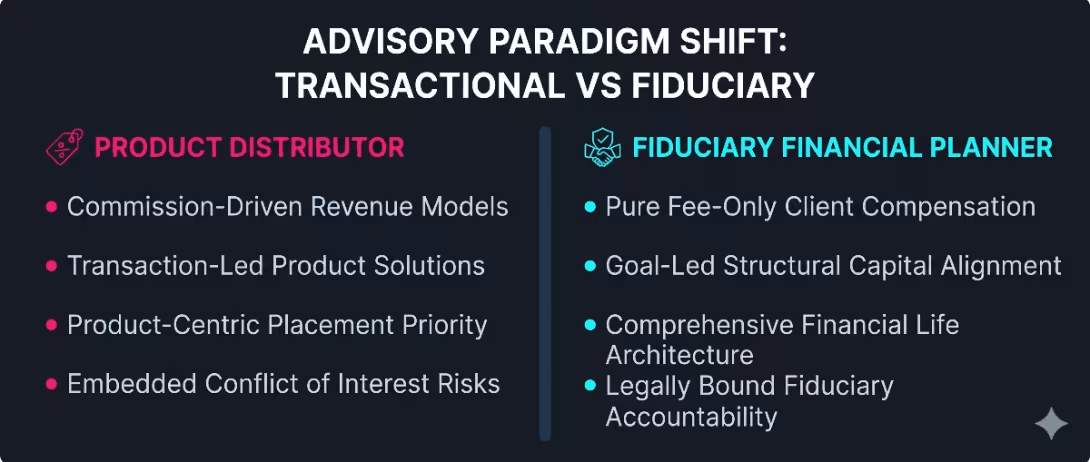
Different Financial Service Models in India
To navigate the local landscape safely, investors must understand the regulatory boundaries, legal obligations, and underlying revenue models that govern various financial market intermediaries in India:
| Parameter | Mutual Fund Distributor | Insurance Agent | Wealth Manager | SEBI Registered Investment Adviser (RIA) |
|---|---|---|---|---|
| Primary Revenue Source | Commissions from fund houses | Commissions from insurance firms | Mixed commissions and product cuts | Advisory fees paid directly by clients |
| Fiduciary Obligation | No (Governed by suitability) | No (Governed by sales targets) | Varies by company setup | Yes (Legally bound to put clients first) |
| Product Neutrality | Limited to affiliated networks | Limited to partner providers | Depends on corporate ties | Absolute (Completely product-neutral) |
| Core Operational Focus | Executing regular transactions | Selling individual policies | AUM scaling and cross-selling | Central goal-based financial architecture |
| Conflict of Interest | High (Driven by trailing payouts) | High (Driven by upfront payouts) | Possible (Due to target pressures) | Minimal (Completely commission-free) |
| Regulatory Oversight | AMFI / Mutual Fund Association | IRDAI / Insurance Authority | Mixed (SEBI / AMFI / RBI) | Securities and Exchange Board of India |
| Suitability Obligation | Limited retail checks | Very limited product matching | Varies based on size tranches | Strong mandatory regulatory suitability |
| Portfolio Review | Varies by distributor choice | Rarely executed post-sale | Varies by asset tranches | Structured, systematic annual tracking |
| Documentation Standards | Limited administrative files | Limited proposal sign-offs | Varies by platform complexity | Strict mandatory compliance record-keeping |
Why Fiduciary Advice Matters
A true fiduciary relationship means that your adviser is legally bound to put your financial interests above all else. Under the SEBI (Investment Advisers) Regulations, a registered RIA is required to eliminate conflicts of interest, provide absolute fee transparency, follow strict suitability rules, and maintain detailed documentation for every portfolio recommendation. This operational difference becomes clear when comparing product-centric advice with goal-centric architecture:
| Product-Centric Advice | Goal-Centric Architecture |
|---|---|
| Focuses on transaction volume: "Buy this fund to capture recent small-cap alpha." | Focuses on your plan: "What life milestone are you trying to achieve?" |
| Transaction-focused execution models. | Planning-focused long-term lifecycles. |
| Recommends isolated financial products. | Builds an integrated portfolio architecture. |
| Sales-oriented distribution targets. | Outcome-oriented fiduciary alignments. |
The Hidden Cost of Commission-Driven Advice
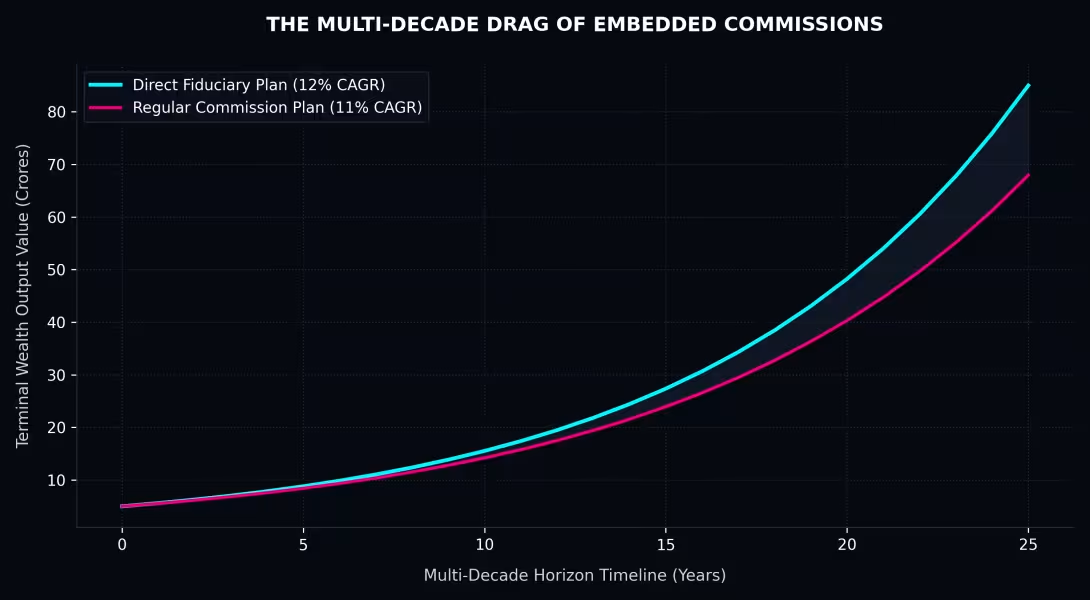
Many investors lean toward commission-led intermediaries because they don't charge an explicit upfront advisory fee. This preference overlooks the long-term impact of embedded distribution costs through Regular Plans. In a Regular Plan mutual fund, the asset management company automatically deducts an extra 0.50% to 1.25% from your total portfolio value every year to pay trail commissions to the distributor.
While an extra 1% annual charge might seem minor over a single year, the compounding effect over a multi-decade investment horizon can be substantial. For instance, investing ₹5 Crores over a 25-year period with an annual return profile of 12% inside Direct Plans compared to an 11% return inside commission-heavy Regular Plans creates a cost difference exceeding ₹3 Crores in lost terminal wealth. This variance is caused entirely by embedded distribution friction, excessive insurance allocations, unhedged portfolio churning, and misaligned over-diversification.
Why Behavioral Coaching Matters
A major value driver in a true fiduciary relationship is behavioral coaching. Many poor financial outcomes do not stem from a lack of product access, but from emotional decision-making. The average investor's actual realized returns are often noticeably lower than the stated returns of the funds they hold due to the behavioral gap. This gap is driven by common emotional patterns: panic selling during market corrections, greed-driven performance chasing at market peaks, and constant portfolio churning.
A fee-only RIA acts as an emotional circuit breaker for your wealth. By keeping your choices grounded in data and anchored to your clear personal financial plan, an independent adviser helps keep your compounding strategy steady through unpredictable market cycles, protecting your capital from impulsive behavioral mistakes.
What Happens After the Recommendation?
True financial advice is not a one-time product transaction. The initial plan and asset recommendations are simply step one in a continuous management loop. Once your baseline portfolio architecture is deployed, a fiduciary relationship handles five ongoing operational responsibilities:
- Continuous Portfolio Monitoring: Tracking active tracking errors, managing style drift, and monitoring fundamental deviations inside your underlying holdings.
- Systematic Rebalancing Frameworks: Restoring your target asset allocations when market movements push your portfolio past asset boundaries, helping you sell high and buy low safely.
- Execution Tracking: Ensuring capital moves smoothly through direct, fee-optimized channels without embedded distributor commission leakage.
- Compliance Record Maintenance: Keeping detailed regulatory justification logs up to date to ensure your portfolio remains aligned with changing SEBI guidelines.
- Dynamic Plan Adjustments: Updating your strategy parameters as tax codes change, corporate actions occur, or personal financial situations shift.
The Compliance and Investor Protection Ecosystem
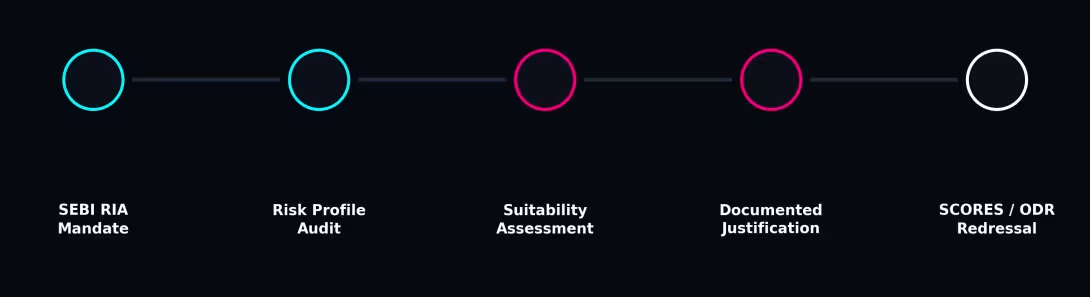
A key difference between a casual advisory relationship and a SEBI Registered Investment Adviser is the strict regulatory compliance framework designed to protect investors. Under SEBI guidelines, an RIA must adhere to rigid professional standards: mandatory risk profiling documentation, formal suitability assessments, structured client communication records, and annual compliance audits.
Furthermore, investors inside the SEBI RIA framework have access to formal grievance escalation channels. If a conflict of interest occurs or suitability mandates are broken, investors can escalate their concerns through these institutional systems:
- Internal Grievance Handling: Every registered RIA must maintain a dedicated internal grievance desk to review and address client complaints within a set regulatory timeline.
- The SEBI SCORES Platform: If the internal resolution is unsatisfactory, investors can log complaints directly onto the SEBI Complaints Redress System (SCORES). This centralized platform is monitored directly by the Securities and Exchange Board of India to ensure swift, mandatory accountability.
- Online Dispute Resolution (ODR) Mechanism: For complex disputes, investors can use SEBI's specialized Online Dispute Resolution mechanism. This platform provides an efficient, digital arbitration route to resolve conflicts fairly without the delays of traditional court systems.
Financial Planning Is a Process, Not a Product
Financial planning is not a static, one-time document. It is an evolving process because your financial life changes over time. Your income, tax rates, family structure, risk tolerance, and retirement timelines will shift, while external regulations and market conditions continue to evolve. Because your life is dynamic, periodic reviews are critical to ensure your portfolio remains aligned with your long-term goals.
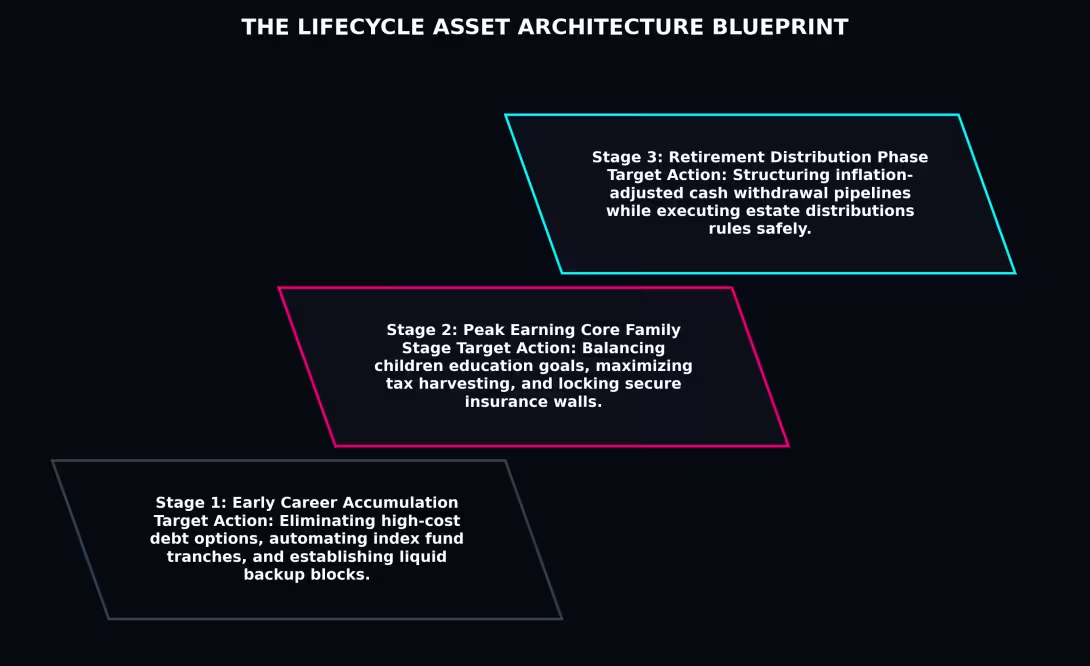
Investor Lifecycle Suitability Framework
To maintain structural alignment across your wealth journey, your financial plan must adapt to the unique priorities and challenges of your specific lifecycle stage:
- The Young Technology Professional: Focuses on building high-purity liquid emergency reserves, automating direct low-cost equity index tranches, and setting up basic term insurance covers. Their core challenge is avoiding speculative trend-chasing and managing concentrated stock option risk.
- The Established Family Unit: Focuses on mapping children's higher education targets, maximizing active tax harvesting, and securing comprehensive health insurance walls. Their core challenge is avoiding expensive, commission-heavy insurance-cum-investment plans (ULIPs).
- The Business Owner / Corporate Executive: Focuses on separating personal wealth from corporate liabilities, managing liquidity lines, and organizing cross-generational estate structures. Their core challenge is preventing excessive concentration risk within their own business sector.
- The Retirement Phase Track: Focuses on structuring predictable, inflation-adjusted monthly withdrawal pipelines while setting up safety guardrails to protect capital. Their core challenge is avoiding high-yield debt traps during periods of falling interest rates.
Common Problems Seen in Product-Led Portfolios
When a portfolio is built around product sales rather than a unified plan, it frequently develops several common structural issues:
- Holding an unmanageable collection of 25+ overlapping mutual fund schemes.
- Relying on expensive, low-yield investment-linked life insurance policies instead of pure term covers.
- Facing unexpected tax liabilities due to uncoordinated portfolio churning and high turnover.
- Maintaining an inadequate emergency fund, which can force the early liquidation of long-term equity assets during a personal crisis.
- Accumulating a random collection of monthly SIPs without a clear asset allocation strategy.
- Lacking valid wills or aligned account nominations, which exposes the family estate to potential legal delays.
Questions Savvy Investors Should Ask Before Choosing an Adviser
To evaluate a prospective financial adviser and protect your portfolio from hidden conflicts of interest, ask these six foundational questions before signing any advisory agreement:
- How exactly are you compensated for your recommendations? If the adviser receives commissions, trailing payouts, or incentives from product providers, their advice is fundamentally conflicted.
- Are you legally acting in a fiduciary capacity? Ensure your partner is a SEBI Registered Investment Adviser who is legally bound to put your financial interests first.
- Will you provide a structured, written suitability documentation for your advice? Legitimate fiduciary advice under SEBI guidelines requires formal, written justification records for every portfolio recommendation.
- How do you track and manage potential conflicts of interest? A transparent adviser will disclose any affiliations or background factors that could influence their guidance.
- Is your planning approach built around my specific lifestyle goals or driven by financial products? Fiduciary planning starts with your cash flow lines and life milestones, not a sales pitch for a specific fund wrapper.
- What formal grievance mechanisms do I have access to if a dispute occurs? Verify that the relationship is backed by regulated escalation systems like the SEBI SCORES network.
The Evolution of Financial Advice in India
The wealth management industry in India is undergoing a significant transformation. The traditional era was dominated by product distribution, where success was measured by sales volume and embedded commissions. Today, the industry is shifting toward planning-led advice, driven by stricter SEBI regulations, fee transparency, and growing investor awareness. Savvy investors increasingly recognize that commission-free, direct execution paths are the most efficient way to build and protect long-term wealth.
What an Ideal Financial Advisory Relationship Should Look Like
An optimal financial advisory relationship is built on transparency, clear accountability, and a shared focus on your long-term success. It means having your recommendations backed by written suitability records, receiving systematic portfolio reviews, and working with an adviser who can provide steady behavioral guidance through volatile market cycles. True financial planning is not about selling financial products; it is about helping families make informed, long-term choices that protect and grow their multi-generational wealth.
We invite you to explore our comprehensive Get Started Onboarding Roadmap to learn about our transparent processes, or connect with our secure gateway to arrange your private, zero-obligation portfolio diagnostic session today.
Skip commission-driven sales pitches and align your capital with a pure fee-only fiduciary adviser.